
How to Select the Right Wetsuit
Diving is an immersion into an exotic environment. As non-marine mammals, people must adapt to improve safety and comfort. Experienced divers know that choosing the right exposure protection is an important part of that adaptation. The right wetsuit can be the difference between maximizing your bottom time and missing dives due to uncomfortable cold. This article will help guide you towards selecting the suit that suits you best!
How a wetsuit keeps you warm
Wetsuits use three basic elements to keep divers warm: foam, water, and seals.
First, foamed rubber, typically neoprene, is available in different thicknesses. The foam itself provides an insulating waterproof barrier between you and the environment. Neoprene is often lined, inside and out, with a layer of high-stretch material like spandex or fleece that protects the foam from damage and may increase the insulating properties. The thicker the foam in the core of the suit, the more insulation it offers. There are different grades of neoprene that offer more stretch and flexibility. High-quality dive suits use nitrogen vs air bubbles which resist compression at depth.
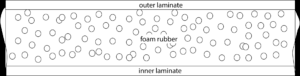
Second, water that enters the suit through the seals is warmed by the heat your body radiates; some of this heat is retained in the water and it helps to add to the overall insulation of the suit. Ever wonder why wetsuits are so form-fitting? It all comes down to ensuring the layer of water that sits between your skin and the suit is just right for increasing thermal protection without saturation. A good fit is essential to keeping you warm.
Third, the seals on the neck, wrists, and ankles prevent cold water from moving into the suit and warmed water from moving out. Most standard wetsuits have relatively open seals, while semi-dry suits have tighter fitting seals and other features that prevent water exchange in and out of the suit. Effective seals that fit well can make a semi-dry wetsuit significantly warmer than a standard wetsuit, especially when paired with complementary hoods, gloves, and boots.
Selecting the right suit for the conditions
Wetsuits are available in numerous styles and thicknesses that will help ensure you stay warm under a variety of conditions. The diagram from SSI below offers a high-level overview of what suits are typically used in different water temperatures:
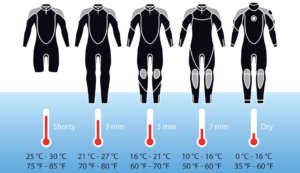
SSI Suit Selection Guidance
Other factors that may impact your suit selection should be considered include the target depth of your dives, the frequency and/or duration of your planned dives, and your personal temperature regulation.
Depth: Neoprene, being a foam, compresses when ambient pressure increases the same way air inside your buoyancy compensator does. This means the deeper you dive, the thinner the suit becomes and the less insulation it provides. Water temperatures at depth may also be cooler than those in shallow water. Therefore, if you plan to dive deep, consider a thicker suit.
Frequency: As most open water diver students learn in class, water is almost 25-times more conductive than air when it comes to temperature. That means that when divers spend a long time immersed in water their core temperatures may begin to drop. This is most noticeable when you spend a significant portion of your time underwater over the course of multiple days and can easily be quantified with a thermometer! The next time you go on a dive trip, take a baseline temperature measurement before your first dive and check for decreases as the trip progresses. If you plan to dive a lot, make sure to bulk up on your suit selection!
Personal comfort: Depending on your body composition, physiology, and metabolism, you may find that you run “hotter” or “colder” than other divers. There is no way to predict the individual variance but if you tend to get cold easily you should opt for a thicker suit or one with semi-dry features. Members of the polar bear club may be able to get away without insulation in tropical waters. If you don’t need the insulation, consider investing in a dive skin or a rashguard & leggings to protect against sunburns and stings.
What’s the deal with Drysuits?
If you’re planning on diving locally, especially outside of the late summer season, you may find that the warmest wetsuits just don’t do the job. Deep New England dives can be as cold as the high 30’s (ºF) as late in the season as July! If you are interested in extending your dive season, make sure to read up on why we dive drysuits here!
The Suits We Dive at East Coast Divers
At East Coast Divers, we test numerous brands and have selected a few choice suits based on factors including quality, comfort, and price.
Henderson Thermaxx
The Thermaxx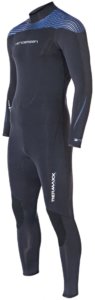 has been the workhorse of ECD’s rental department for years for good reason. Its high-quality neoprene offers excellent stretch which makes donning and doffing manageable, even at the 7mm thickness. The suit is available in numerous size options including many short and long sizes for men and women.
Key Features
- Super soft, high stretch neoprene.
- Fire Fleece lining.
- Double glued and double (interior & exterior) stitched seams provide longevity, confidence, and performance in the most demanding conditions. (3, 5, and 7mm only)
- Henderson’s patterns have evolved over 50 years from USA standards. Every TherMAXX wetsuit style is patterned, cut, sewn, and fitted in the USA, prior to any production manufacturing.
- Hook and Loop Closure-resistant outer fabric.
- PK G-Lock zipper with colored teeth. (3, 5, and 7mm only)
- 8mm domed spine pad.
- Titanium-infused lamination adhesive.
- Embossed DuraTex® stretch knee pad.
- 10-year Limited Warranty.
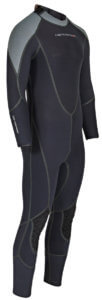 Henderson Aqualock
If you’re interested in increasing your warmth without adding extra thickness the choice is clear! The Henderson Aqualock suits help prevent water from flushing with semi-dry features. The 5 and 7 mm suits feature open-cell double-locking wrist and ankle seals that create an excellent hydro-repellent barrier when fitted with compatible gloves and boots. When you invert the suit the quick-dry lining helps rapidly remove moisture so the suit is ready for packing in no time at the end of your trip!
Key Features
- Super soft, high stretch neoprene.
- Liquid Taped Aqua Lock® Seams
- Double Glued & Blind Stitched
- Zipperless Cuffs & Ankles
- Quick Dry Lining • Aquasilk® Exterior Laminate
- PK® G-Lock Water-Resistant Zipper
- Anti-pilling Aquasilk laminate exterior
- Duratex Knee Pads
- Adjustable Collar
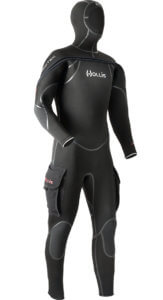
Hollis Neotek V2 Semi-dry
The choice of ECD’s technical divers for years, the Hollis Neotek semi-dry wetsuit is packed with features that make it the perfect suit for long dives in deeper waters. It’s equally at home in Yukitan Caves and New England Shores.
Key Features
- A mix of 8/7/6 mm compression resistant and super-stretch neoprene is optimized for the perfect fit and insulating properties
- The neoprene production waste is recycled and reused—minimizing landfill waste
- An exclusive “ThermaSkin” inner liner makes donning and doffing a breeze and increases insulation
- A water-resistant G-lock horizontal front zipper with an internal bib helps keep cold water out!
- Neck, wrist, and ankle internal dams to prevent water transfer
- Seams are quadruple glued and butt joined with a blindstitch and then double taped for extreme protection
- Tech-friendly thigh pockets on both left and right thigh for storage of critical accessories
- The attached hood will keep you warmer, longer.