Many exciting dive sites are located in deeper water. Without proper training, this kind of diving puts you at risk. The SSI Deep Diving Specialty will give you the ability to safely and comfortably plan and conduct dives beyond 60 feet. It is required training for many charter and liveaboard operations and is a prerequisite for some advanced training.
Why learn deep diving?
There are endless reasons for a diver to want to push their boundaries and venture deeper. There are amazing wrecks and reefs just waiting for you down there to explore what they have to offer. The deep diver course gives you the experience, techniques, and ability to be prepared for the new challenges you’ll face by going deeper. The underwater world is very different once you start going deeper than 60ft. Nitrogen narcosis, decompression planning, and air consumption have more rigid requirements at depth. These are just a few of the reasons why diving deeper is much safer with the proper training. The Deep Diving class includes one class session, one pool session, and a minimum of 3 open water dives. These dives can be completed from some select shore diving sites.
Why train with ECD?
- Ours is the only deep speciatly course availalbe locally. You’ll do a confined water session and 4 dives over 2 days with your instructor to develop your comptence and confidence.
- Our separate academic session allows for in depth discussion of deep diving safety, planning deep dives and give you the opportunity to ask questions allowing your in water day to be all about the diving.
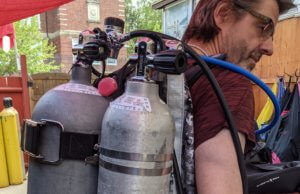
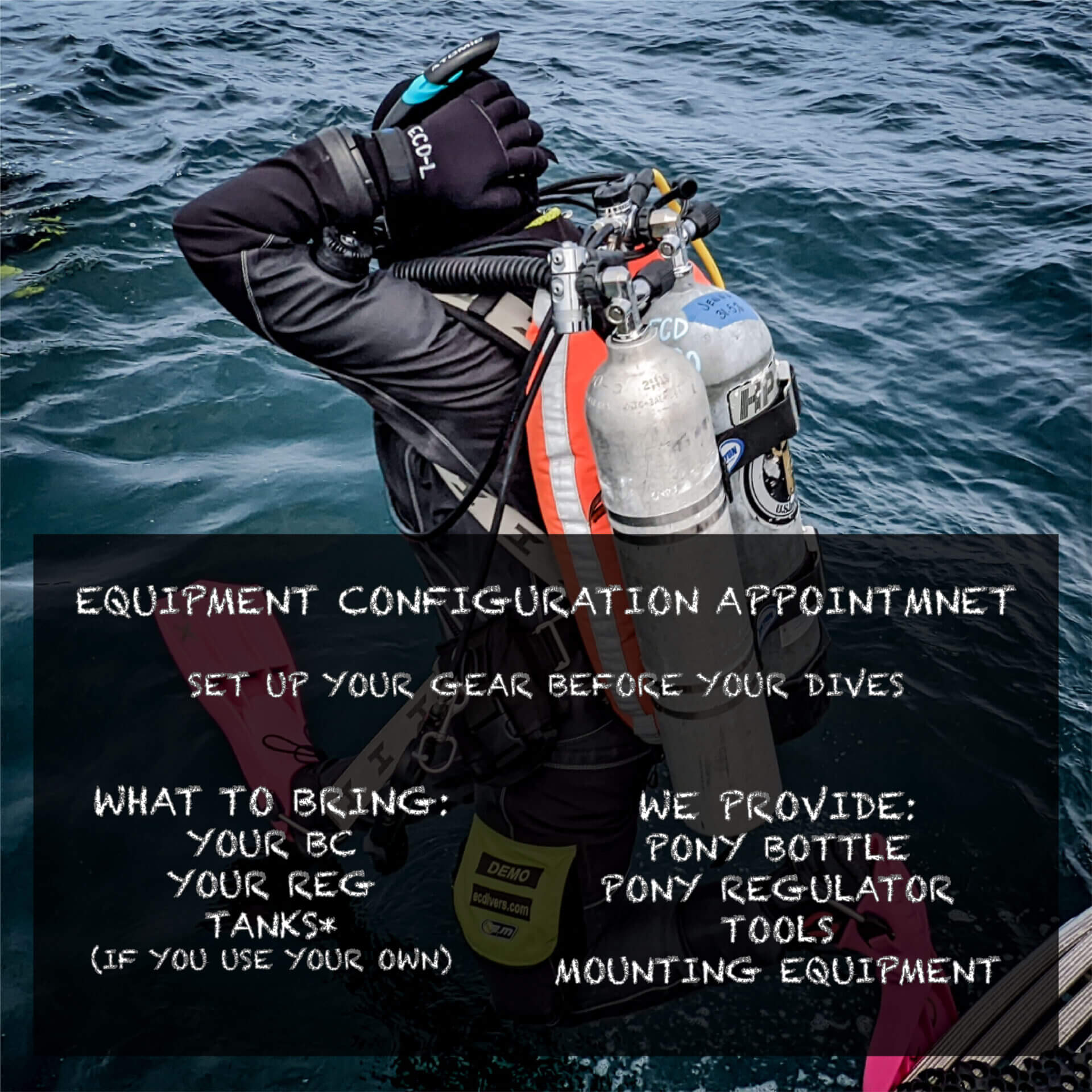
- Your personal equipment rigging session will allow you to practice rigging your scuba set up for deep diving on your own. We provide the pony bottle, tools, instructions and advice for you to successfully add a back mounted pony bottle to our scuba uit.
- Our course will fully prepare you for deep diving locally including how to use a pony bottle (back mounted), deploying a DSMB from depth, using multiple kick techniques, and adjusting in water trim with additional equipment.
- You’ll learn and practice skills in a safe, calm pond environment and then apply them to deep ocean dives.
Our deep diving course is unlike ANY OTHER and trains you not only to experience added depth in a safe environment but also how to plan for and mitigate potential added risks. Our deep diving program teaches both new equipment techniques and skills that other deep-diving courses don’t even address.
“The ECD Deep class fully prepared me to explore the amazing New England deep water wrecks and made me feel comfortable with diving beyond the OW limits given the knowledge and skills we acquired during the class” -Bing Shui, Deep Diver certified in 2020
ADVANCED SKILLS INCLUDE:
Delayed Surface Marker Buoy (DSMB) Deployment – A DSMB is a brightly colored inflatable tube that can be inflated and deployed while at depth. This tube is attached to a line and spool you hold at depth so that you can maintain contact and control of it while it is at the surface. This tool and the technique are paramount for deep divers to master so in the event they get separated from their team or the ascent line to their surface support (i.e. a dive boat) they can quickly mark their location without having to quickly ascend. A skill that takes practice to master but is of the utmost importance to deep divers.
Redundant Gas Supply Orientation and Use – As depth increases so does pressure. This added pressure causes a diver to consume more gas the deeper they go. At 66 feet a diver will consume 3x the amount of gas they do at the surface and 4x in 99 feet of water. This added gas consumption can create a big problem if you need to share air at depth. The added depth can also cause a regulator to have a drastic reduction in performance if more than one diver is breathing hard on it, such as in a real-world gas sharing scenario. Lastly, it is also very reassuring to have a completely redundant supply of gas in case yours fails so you still can ascend at a controlled rate and perform a proper safety stop
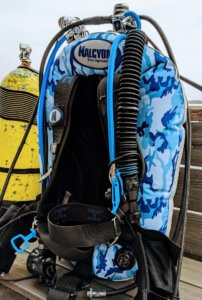
A Halcyon Backplate & Wing with a back-mounted pony bottle
This is why we equip and teach all of our deep-diving students to use pony bottles. A pony bottle is a small cylinder (1/3 to 1/2 the size of your primary tank) that has an independent regulator system. This additional bottle can take a bit of getting used to but adds a tremendous amount of safety to deeper dives and we recommend it to any of our divers venturing deeper or in poor visibility conditions that could lead to team separation such as scallop diving.
Advanced Dive Planning – The days of jumping into the water without a well-vetted dive plan are over. How much gas do I need to have left in my tank to have a realistic chance of getting myself and my team to the surface in an out of gas scenario? Does my team have enough gas to help me should I have a lost gas failure? What is our emergency plan should the team get separated at depth. How will redundant dives affect my decompression limits based on previous dive times and depth? How can I plan for a multilevel dive with my team? What likely failure scenarios does this deeper dive introduce and how can my team better prepare for them? These are not hard questions to answer but they do require some thinking and know-how which is all addressed during our deep diving program.
When does the class run?
Class starts with a weeknight zoom session, followed by an in-person equipment configuration workshop during the week. On Saturday, you’ll develop skills in the confined water setting before exploring deeper waters at Hathaway’s Ponds. Sunday, you’ll join the crew of the Cape Ann Diver II for deep dives in the waters outside Gloucester Harbor or from shore at a site on the N shore or in RI. Check course schedule to see if it’s via shore or boat.
This course only runs in July and September. Sign up now so you don’t miss your chance to take it!
All Classes | Drysuit Diving | Deep Diving | Navigation | Enriched Air Nitrox